







More about: Marrakech in 1 Day: quick guide to the city
Do you only have one day to visit Marrakech and want to make the most of your time? The good news is that you can at least visit the city's must-see attractions. The bad news is that you won't be able to get to know it in depth, and above all, it will be difficult to capture all the magic it exudes.
To make the most of those 24 hours, we've put together this itinerary that covers the most interesting sights, albeit at a faster pace than ideal. In any case, I can assure you that you'll enjoy the experience as long as you keep an open mind and a spirit of adventure.
Start your day by crossing Bab Agnaou
The day in Marrakesh should start early to make the most of your time. When planning your route, take into account the time of sunset, as it varies considerably depending on whether you are visiting Marrakesh in winter or summer, as temperatures in recent summers have been very high.
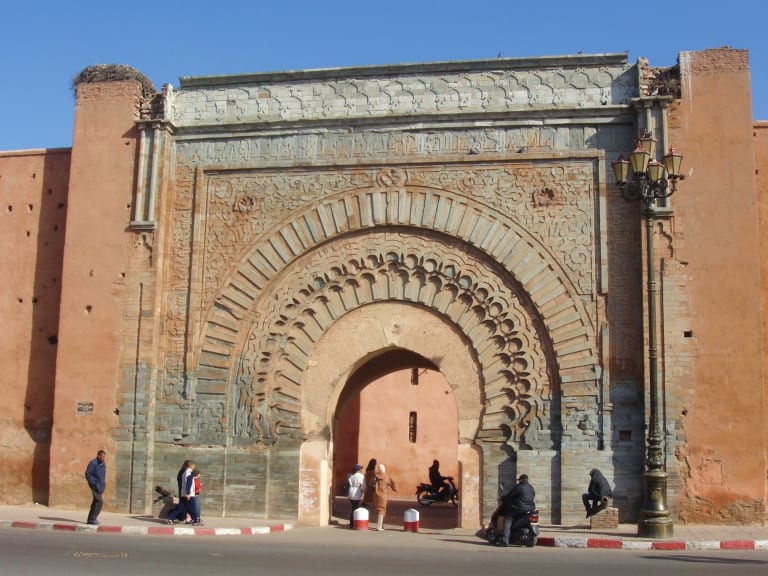
To start, head south until you find two city gates that are almost next to each other: Bab Agnaou and Bab Er Robb (Bab means "gate" in Arabic). The first one consists of only four arches through which pedestrians and cars enter and exit, and its interest is relative. However, Bab Agnaou is well worth a visit.
This 12th-century, single-colour gate connects via a central arch to the royal kasbah, where the El Badi Palace and the Saadian Tombs are located. Bab Agnaou was one of 19 entrances in the wall surrounding the medina.
Guided tour or on your own?
This day trip to Marrakech can be done on your own or you can hire one of the various guided tours offered by the city. Both options have their pros and cons, so you will have to decide which one you prefer. The main advantage of having a guide take you around the city is that you will avoid the presence of fake guides and you will receive interesting information about what you are seeing.
On the other hand, you won't experience the magic of getting lost (literally) in its narrow streets, although with so little time, this may mean you won't be able to visit some places. A good tip is not to despair until you learn how to get around Marrakech.
Saadian Tombs

Guided by a green-tiled minaret, a few metres from Bab Agnaou you will reach the Mulay El Yazid Mosque, of which the aforementioned minaret is a part. Non-Muslims are not allowed to enter the temple (something you should know when planning your visit to Marrakech), but next to it are the Saadian Tombs.
These tombs date back to the late 16th century. It was then that the ruling sultan, Al Mansur, ordered their construction, but a few decades later another sultan, Mulay Ismail, blocked access to them. For some reason, the tombs fell into oblivion until 1917, when they were rediscovered. Today, these tombs can be visited, although there is an entrance fee. To enter, you have to walk through a narrow corridor that leads to a small garden. This is where the tombs of various warriors, chancellors and servants are located.
In addition, you can also see some buildings where more important figures are buried. The so-called hall of 12 columns, where the remains of Sultan Al Mansur himself rest, stands out for its beauty.
Bahia Palace

To reach the next destination, you have to wander through the southern part of the Medina of Marrakech, for which you can also book a tour to get to know it better. And, although the goal is to reach the Bahia Palace, it is worth making a short stop at the Place des Ferblantiers along the way, as it retains a great deal of charm and is full of shops specialising in metal products, especially tin.
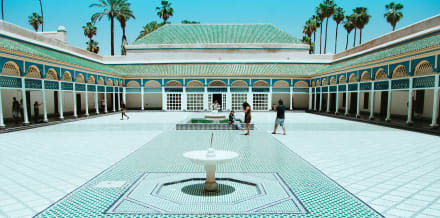
Leaving this square behind, you will finally reach the Bahia Palace. Its construction dates back to the late 19th century, when they attempted to build the largest palace of all time.
The most interesting part of the interior is the harem, which has a pond in a central courtyard surrounded by the concubines' rooms. We recommend that you spend a little time strolling through its wonderful gardens, and bear in mind that, if you don't have your own guide, you will be approached by quite a few guides (fake or otherwise) who will try to get you to hire them. They can even be a bit annoying, so my advice is to avoid them.
Dar Si Said Museum
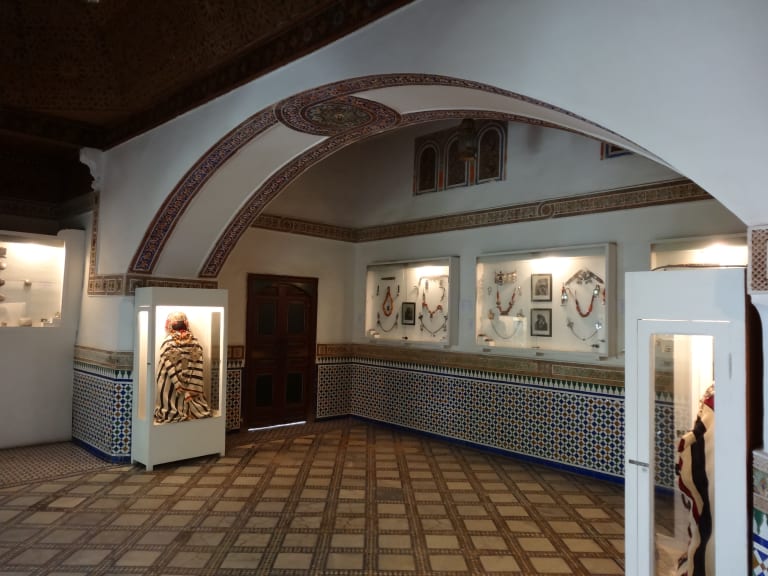
The city of Marrakech is not usually associated with museums, but rather with its streets or excursions to deserts such as Zagora, even booking a sweet evening with dinner if you wish. However, the Dar Si Said Museum may be worth a quick visit.
To get there, you will have to walk through some narrow alleys, trying not to get lost. In addition to having the most complete collection in the city, it is worth admiring its courtyards and the decoration of its ceilings, doors and furniture made of cedar wood.
Jamaa el Fna Square

If there is one image that represents Marrakech, it is that of Jamaa el Fna Square. This is where you should head after leaving the museum, as it is an essential visit when in Morocco. This will be your first visit to the square, as you will return at sunset to see the great change that takes place. On this first visit, the square will be full of vendors selling fresh juices, nuts, water carriers and merchants selling all kinds of products.
You will also find numerous street performers, such as snake charmers and monkey tamers. Of course, you will find the typical henna tattoo stalls, which are a must-see during your visit!
You will probably want to photograph almost everything in the square, but we recommend that you never do so without first asking permission and negotiating a price.
Lunch and rest at Dar Cherifa
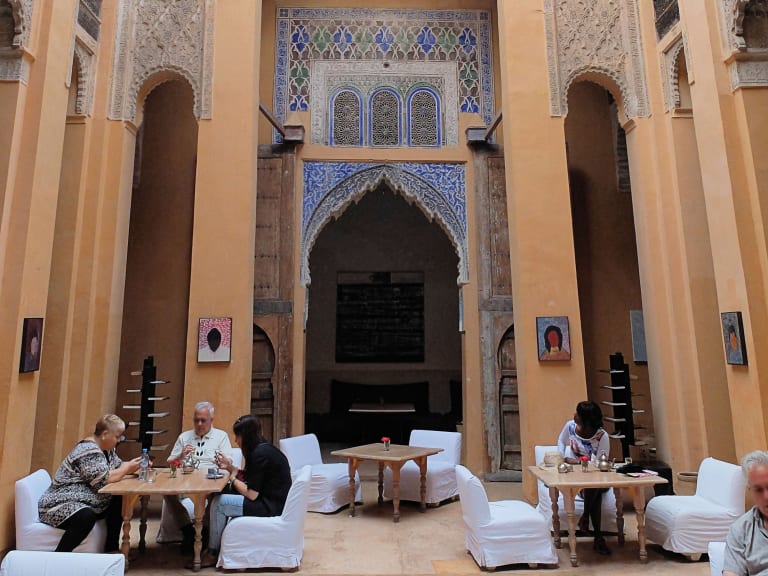
It's time to recharge your batteries and try some delicious Moroccan food. The best way to get to know this cuisine is to book a tour dedicated to it, but this may be a little difficult if you are only spending one day in Marrakech.
The best place to relax and have something to eat is Dar Cherifa, one of the oldest riads in the city. The most popular dishes (deservedly so) served at Dar Cherifa are tagines and couscous. Whichever you choose, I assure you it will be a good choice.
The Souk

The word souk comes from the Arabic "suq", which means market. So, it's clear that the next few hours of the tour will be spent getting lost in the narrow streets dedicated to selling all kinds of products.
The streets that make up the souk are usually completely crowded with people, and visitors and passers-by compete to find a space to see the stalls and walk around at their leisure. My advice for travelling to Marrakech is, above all, to take it easy and avoid those vendors who try to get you to buy in a more aggressive way.
The traditional way to explore the souk is to wander aimlessly, looking at all the merchandise on display: slippers, djellabas, spices, metal lanterns, tea sets, etc. If you like something, remember that it is customary to haggle with the vendor until you reach an agreement, or not.
As you stroll along, you will notice that there are actually several souks on this street, divided according to what they sell. In one area, you can find colourful wool dried in the sun, while in others you will find cosmetics, carpets or silk garments, respectively.
A very interesting area is Rahba Kedima Square, on the outskirts of the souk. Here you will find all kinds of spices, medicinal herbs and basketry.
Medersa Ben Youssef
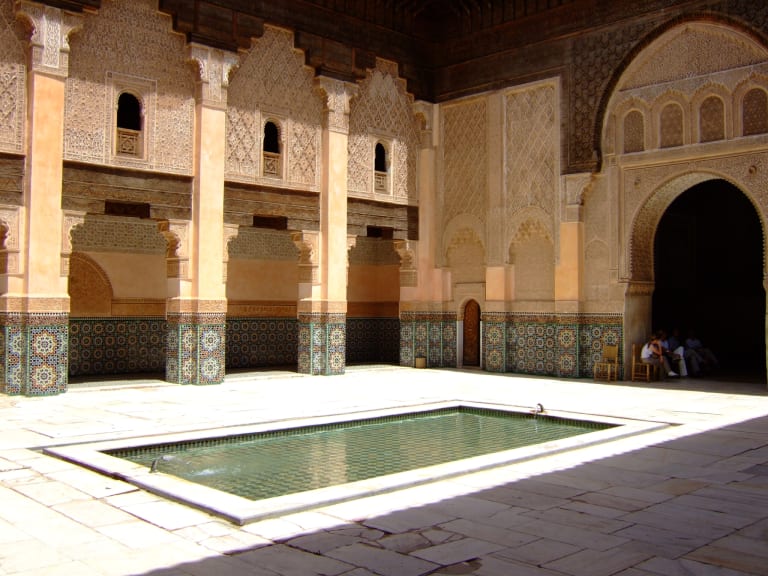
After the adventure of exploring the souk, it's time to visit the Ben Youssef Madrasa. This was the largest Muslim school in the country in the 16th century and beyond.
Its interior courtyard is particularly noteworthy, decorated with an iron lamp, arches and walls with tiles and marble and wood panels.
Very close to this place is the Marrakech Museum. Unless you are very interested in going inside, I recommend that you just take a look at its inner courtyard, as it is well worth seeing.
Next to the museum, you can see the Almoravid Qoubba (a dynasty that also ruled Essaouira and other Moroccan territories), the only example of this artistic style remaining in the city.
There, I recommend visiting the Souk Foudouq Quarzazi, a souk located inside a foundouk, a word that referred to the lodgings dedicated to the members of the ancient caravans that travelled through the desert to reach the city.
Koutoubia Mosque

Wandering back towards the centre, you will reach the Koutoubia Mosque, the most important mosque in Marrakech. Although you cannot visit the interior, its 66-metre-high minaret (some sources claim it is 77 metres high) is truly impressive.
This mosque was built in 1158 and, at the time, was one of the largest in the Muslim world. The minaret is very similar to the Giralda in Seville and remains the highest point in the city.
Enjoy the sunset on the terrace of Café Glacier
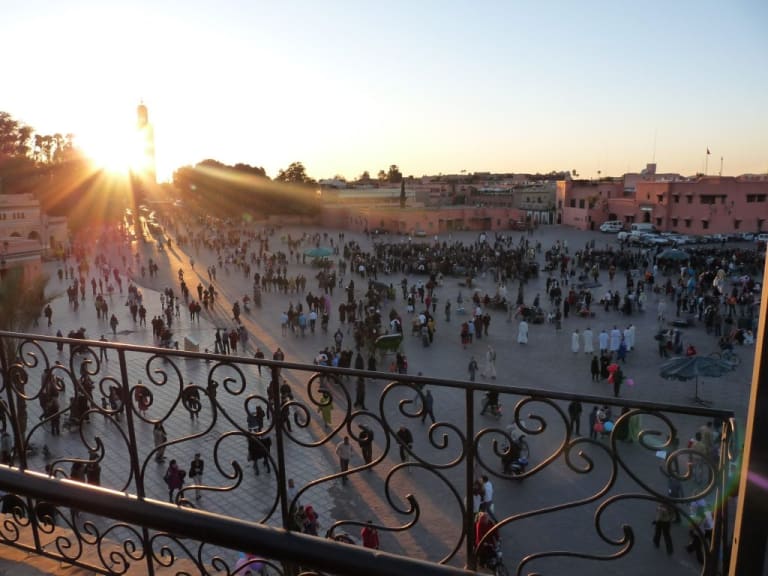
As I'm sure you must be quite tired by now, and the time of day suggests it, this is the moment to head to Café Glacier for a delicious mint tea on its terrace.
From there, you can watch the night fall and see how the sunset transforms the neighbouring Jamaa el Fna square.
Return to Jamaa el Fna Square
As night falls, the vendors who previously occupied the square disappear. Their place is taken by a multitude of food stalls competing to attract visitors.
This is the perfect place to have a drink before returning to the hotel. Before choosing where to sit, it is best to take a look around to see what each place has to offer.
Joaquín's Traveller Tip
The competition between the different food stalls is fierce and, on occasion, some vendors can be a bit pushy. Always remain calm and don't hesitate to sit where you like best, despite the calls from the others.
Where to stay in Marrakech

Some of the accommodation you will find in Marrakech can be counted among the city's tourist attractions. These are, specifically, riads, old traditional houses that have been renovated to become hotels and/or restaurants.
Accommodation in riads usually has few rooms and is very quiet. They normally have a central courtyard and a terrace with views over the city's rooftops.
Beware of fake guides
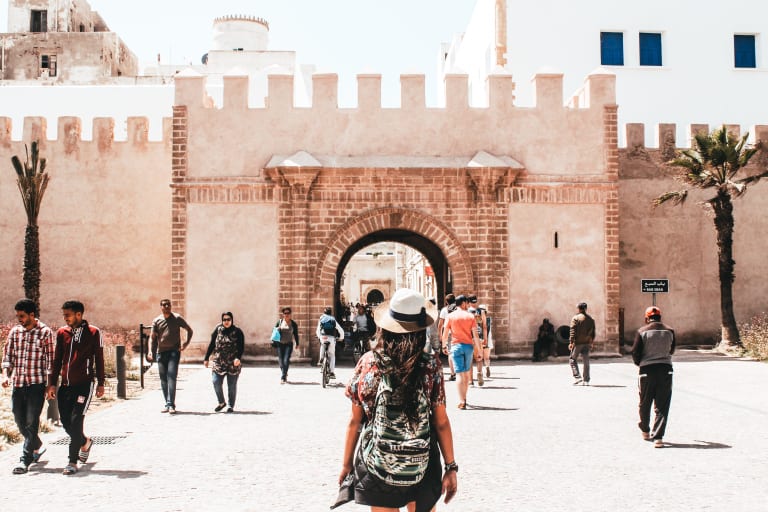
As mentioned above, if you have been doing some research on safety in Marrakech, you will surely have read about fake guides.
As in other Moroccan cities, it is quite common to find unaccredited guides on the streets trying to convince you to hire them. Unlike accredited guides, these guides are not subject to an official fee and can be very insistent.
I therefore advise you to book your guided tour of the city in advance and not to be persuaded by these fake guides. Normally, they will not deliver on their promises and, what's more, you are likely to end up in a shop where they receive a commission.
Is it worth visiting the Marrakech desert on a day trip?
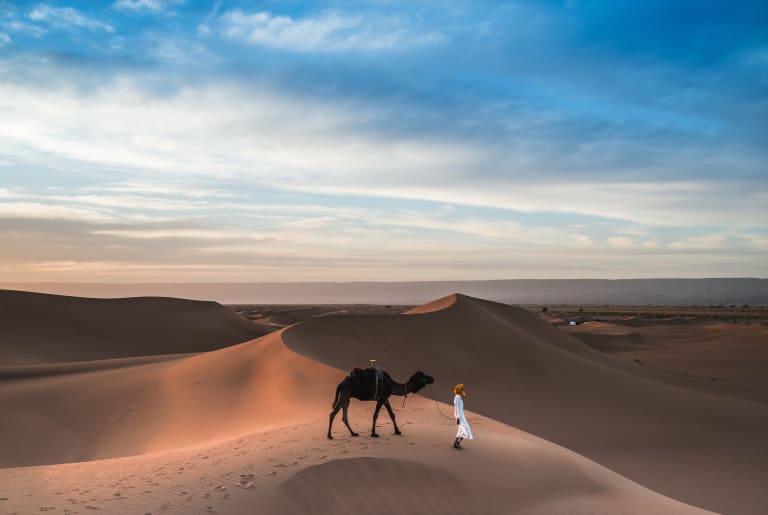
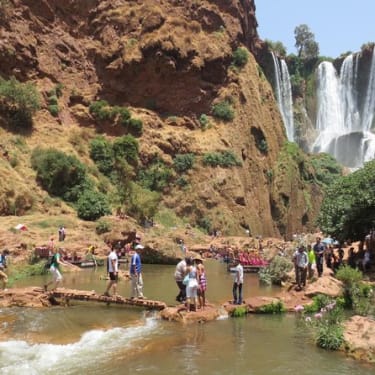
There are several organised tours available, such as the Excursion to the Atlas Mountains and the Ourika Valley from Marrakech or the Marrakech Palm Grove for camel riding. Both activities are well worth it, but if you are only going to be in the city for one day, you should be aware that they will prevent you from enjoying it.
The decision depends largely on your interests, but it would be best to try to extend your stay or, if that is not possible, plan to return in the near future to complete your visit to Marrakech and enjoy all the different types of excursions you can do from there.