

More about: 10 things to do in Marrakech in November
Travelling to Marrakech in November is always a good idea. Between the desert and the Atlas Mountains, temperatures remain pleasant and it is the ideal time for desert excursions.
Festivals such as Independence Day and the International Film Festival fill the calendar with dozens of celebrations. Read on to find out what to do in Marrakech in November.
1. Join in the Independence Day celebrations

On 18 November 1955, Morocco gained independence from Spain and France, which had maintained a protectorate over the territory since 1912. Every year, this holiday is celebrated with festivals, parades and parties throughout the country. Although the main celebrations take place in Rabat, the capital of the kingdom, all the major cities commemorate the declaration of Mohammed V, the king who started Morocco's modern history.
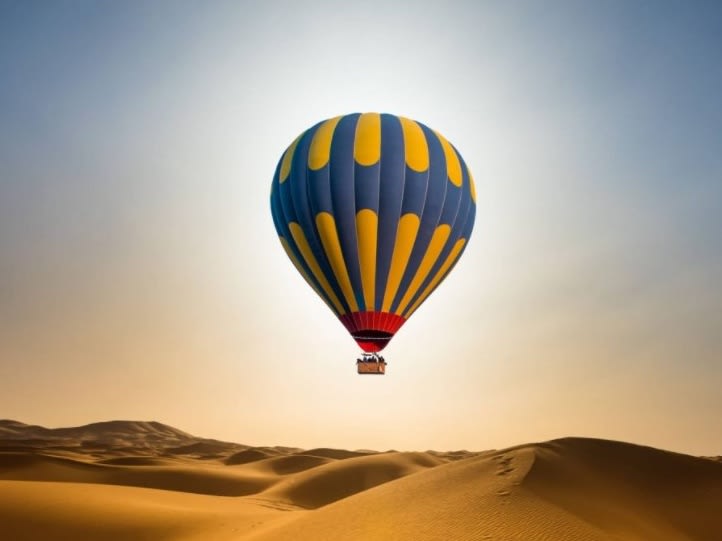
In Jemaa el Fnaa Square and its surroundings, you will find celebrations with traditional music and food, while throughout the city, Moroccan flags fly in the streets. You can join a tour in Marrakech to see the main sights of the city with a local guide who will tell you all about its history. However, I encourage you to discover 10 of the best tours in Marrakech so you can choose the one that best suits your tastes.
2. See Marrakech from above
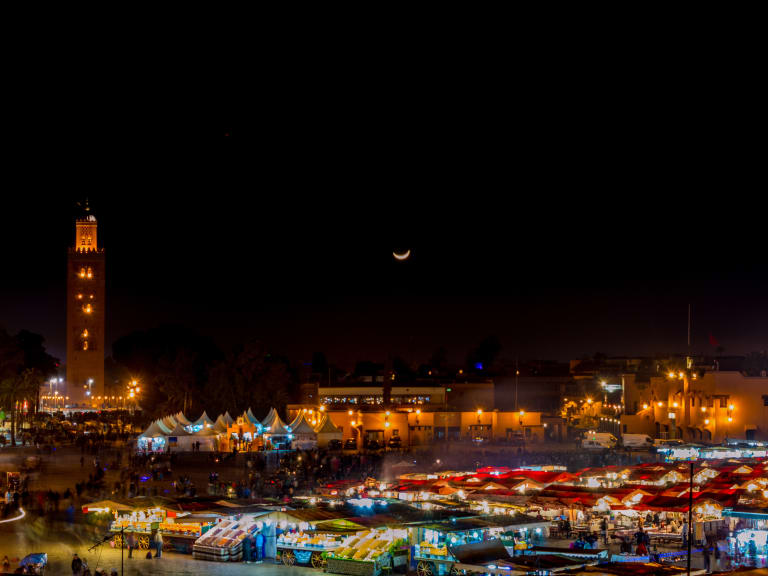
A hot air balloon ride over Marrakech is a beautiful way to admire the Red City from a different perspective. Normally, the balloons take off from a town near Marrakech, fly over Jemaa el-Fna Square and the old town, and then land near the Marrakech Palm Grove.
Leaving very early (usually between 5:00 and 5:30 a.m.), almost all excursions include a pick-up service from your hotel or riad, a traditional breakfast and a "flight certificate" (a small souvenir of the experience). Overall, the activity takes about 5 hours, while the balloon ride itself lasts approximately one hour.
The winter months are the best time for this activity. In addition, the hot air from the burner acts as a radiator, so you won't feel cold. Therefore, travelling in November is ideal. As you leave early, you should bring a jacket, a fleece and sunglasses for when the sun comes out.
3. Catch the last waves of the year in Essaouira

In Essaouira, the wind blows 365 days a year and winter is the best season for surfing. From November to March, this stretch of ocean has westerly winds that guarantee constant waves. Well protected from the strongest currents, Essaouira beach is perfect for those who want to learn to ride the waves.
More experienced surfers, on the other hand, can head to the nearby town of Sidi Kaouki, a true paradise for water sports enthusiasts. Its kilometre-long, unspoilt beach is ideal for surfing, windsurfing and kitesurfing.
After a day of surfing, you can explore the Medina of Essaouira, which was declared a World Heritage Site in 2001. Its well-preserved walls conceal a labyrinth of narrow streets, traditional houses, the Sidi Youssef Mosque and the old Jewish quarter (Mellah). There is also the Skala Fort in the Kasbah, on the seafront, where the episode of Game of Thrones was filmed in which Khaleesi conquers Astapor and frees the slaves.
- If you want to visit this coastal city, I recommend reading the post Excursions to Essaouira from Marrakech.
4. Sip a traditional tea

Although we can taste traditional mint tea at any time of year, when the temperatures are not so high, the experience is undoubtedly better.
In addition, the Red City is known for its tea rooms, and one of the most famous is Café Des Épices. The establishment has two floors and is known for its panoramic window overlooking Rahba Lakdima, the Spice Square. After an afternoon of shopping in the souk, you can treat yourself to a well-deserved break with a steaming cup in your hands. Here, mint tea is still prepared according to the traditional recipe, and I am sure you will not be disappointed.
- If you want to know more about the cuisine of the Red City, I recommend reading the post Moroccan food: dishes you can't miss.
5. Explore the Atlas Mountains by mountain bike

Morocco is a paradise for outdoor sports, and if you like mountain biking, there are several routes through the Atlas Mountains, the mountain range that separates the Mediterranean and Atlantic from the Sahara Desert. Its high peaks are a challenge for any cyclist, and it takes only an hour and a half by car to get there from Marrakech.
There are dozens of tours that organise return transport and provide participants with everything they need: bikes, helmets and an expert guide. There are many options available, with a choice of day trips or tours lasting up to a week.
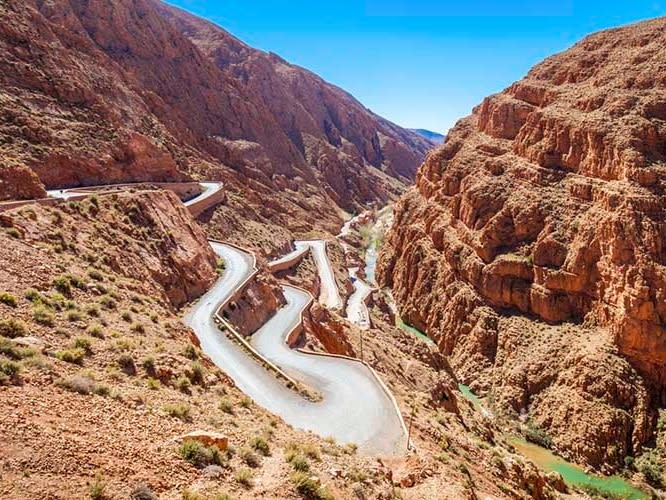
In any case, you will see Berber villages, waterfalls, palm trees, green valleys and the arid landscapes of Morocco. These routes take in Ouarzazate, the walled city known as "The Gateway to the Desert", Erg Chegaga and its great dunes, the Draa Valley and the Tichka Pass at 2,600 metres above sea level. November is a good month to cycle around Morocco. In the warmer months, cycling these same routes is undoubtedly more difficult.
6. Visit the El Badi Palace

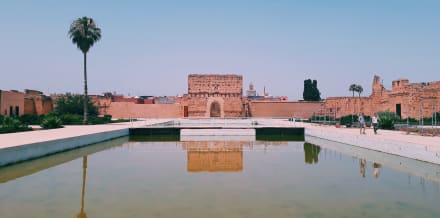
Unlike the Bahia Palace, El Badi is largely in ruins, yet if you close your eyes you can imagine its splendour in centuries past. The building was erected by the Saadi sultan Ahmad el Mansour at the end of the 16th century and its name could be translated as "the incomparable palace". Indeed, the residence had 350 rooms, a swimming pool and several courtyards with lush vegetation.
El Badi Palace was built without regard to expense, using gold from Sudan and marble imported directly from Italy. When the Saadi dynasty fell to the Alawites, their successors plundered its treasures.
If you feel like visiting it, I recommend climbing up to the ramparts. From here, the view over Marrakech is simply breathtaking, but be careful, as storks often build their nests on these walls.
7. Spend a night in the Agafay Desert

Close your eyes and imagine a desert. If you're thinking of tall sand dunes, erase that image from your mind. Agafay is a rocky desert where stone hills stretch to the foot of the Atlas Mountains.
At the weekend, wealthy Moroccans leave Marrakech and drive here to go horse riding, hiking or canoeing on the Lalla Takerkoust reservoir. In this setting, wild nature is the undisputed star of the show and there are dozens of activities to entertain travellers, from Arabic calligraphy classes to quad biking and camel riding.
November is the ideal time for a desert excursion because the temperatures are the most suitable for visiting. As for accommodation, there are several options:
- Lodges: traditional houses.
- Jaimas: nomadic dwellings resembling tents, made from camel, goat, esparto or palm fibre.
- Glamping: a combination of the terms "glamorous" and "camping". It is a global phenomenon that combines the experience of camping in the open air with the comforts of the best hotels. If you want to stay in this area, about 40 km from the Red City, I recommend reading the post Excursions to the Agafay Desert from Marrakech.
8. Visit the Bahia Palace without stress

Winter is a good time to visit Marrakech, as there are fewer tourists, accommodation is cheaper, temperatures are still pleasant and the attractions are less crowded.
One of these is the Bahia Palace, a mansion and set of gardens built by Vizier Ahmed ben Moussa in the late 19th century. After the vizier's death in 1900, the sultan ordered the palace to be looted, but even the pillaging could not tarnish the beauty of this place. The Italian marble and zellij floors – an ornamental mosaic composed of tiles – bear witness to its past glory.
Currently, only a third of the Bahia Palace can be visited, with the other parts occupied by the Moroccan Ministry of Culture. The former residence of the vizier can be visited every day of the year, from 8:30 a.m. to 12:00 p.m. and from 2:30 p.m. to 6:00 p.m.
9. Feel like Aladdin in the Erg Chebbi dunes

During the summer months, venturing into the Merzouga desert is an activity for the brave. Between June and September, temperatures can reach 45º, which is why it is preferable to explore it during the winter. To get there, you have only two options:
- Hire a private vehicle.
- Choose one of the excursions to the Merzouga desert in Morocco.
Unlike the Agafay Desert, the Merzouga Desert is a sandy desert known for the high dunes of Erg Chebbi, a fascinating place that attracts thousands of tourists every year. It is also the starting point for many excursions by jeep, camel, buggy and quad bike, and there are other points of interest in the surrounding area, such as:
- Khamlia: a village of 400 inhabitants founded by the Gnawa, the descendants of slaves from sub-Saharan Africa.
- City of Orion: a Land Art monument designed by German artist Hannsjörg Voth.
10. Experience the atmosphere of the International Film Festival

The Marrakech International Film Festival was created in 2001 by King Mohammed VI to promote the arts and the film industry in the country. Despite its short history, the festival is a must-attend event for many Hollywood stars. Martin Scorsese, Guillermo del Toro, Keanu Reeves and Robert De Niro are just some of the regulars at this major event. The event usually begins in the last week of November and ends in early December.
The International Film Festival takes place in three venues: the Palais des Congrès, the Cinéma Le Colisée and the Yves Saint Laurent Museum. If you can't get into these venues, don't worry. Every night, up to 12,000 spectators gather in the central Jemaa el Fna square to enjoy free outdoor screenings.
Temperatures in Marrakech in November
November is a month of transition between autumn and winter. While mornings are cold, with temperatures often dropping below 15 °C, the weather is more pleasant during the day and in the evenings. The distance from the sea causes significant temperature variations between night and day. In short, the weather conditions in November are identical to those in March.
In Marrakech, November is the rainiest month, but don't worry. After a quick shower, the sun comes back out.
- For more information, I recommend reading about recommended activities to do in Marrakech in winter.
Tourist numbers in Marrakech in November
In Marrakech, the low season begins in November and ends in February (excluding the Christmas holidays). So, if you're thinking of visiting the Red City at this time of year, don't hesitate for a second. The main attractions are usually less crowded, and you can visit places such as the Bahia Palace or Jemaa el Fnaa without the crowds.
- If you're only coming for a few days, I recommend reading the post Marrakech in two days: what you need to know so you don't miss a thing
Prices in Marrakech in November
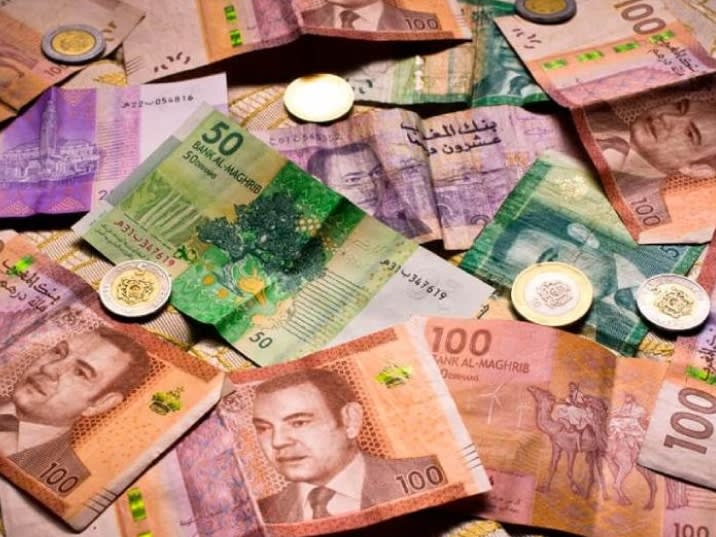
November marks the start of the low season, so prices are good. This month you can find interesting offers and perhaps opt for superior accommodation. In any case, I advise you to book a room in a hotel or riad in advance. Once you've booked, get ahead of the game and check out the best transfers between the airport and the city of Marrakech.
What to pack in your suitcase for a visit to Marrakech in November
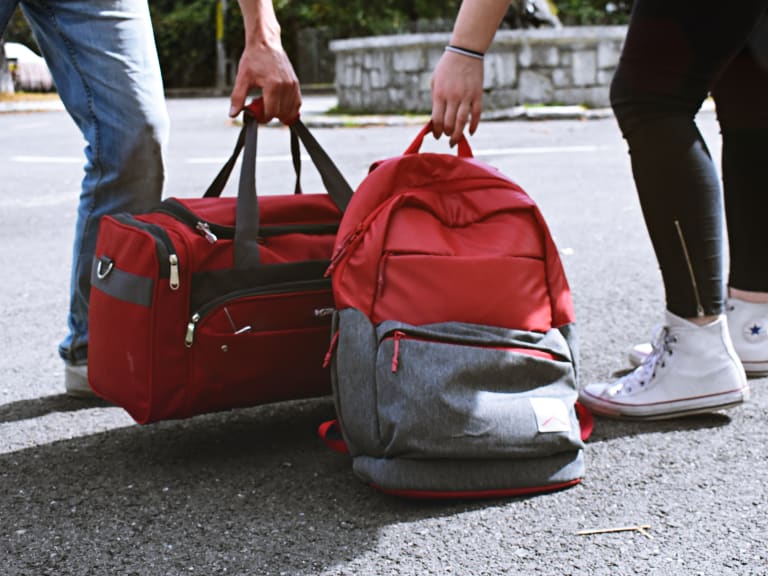
In autumn, the heat is bearable, there is more rain and temperatures begin to drop, especially at night. If you are arriving in Marrakech in November, all you need to do is pack three types of clothing:
- Something light to wear during the day so you don't suffer from the heat.
- Sweatshirts, jumpers and coats if you plan to go out at night, when temperatures drop significantly.
- And a raincoat for thunderstorms, which are strong and intense but usually short-lived.
Bear in mind that in Morocco it is best to avoid overly flashy and elegant clothing and not to display valuables. As for women, it is preferable not to wear clothes that are too tight or provocative.