

More about: Tenerife in 4 Days: a guidebook for getting the most out of your visit
Exploring Tenerife in four days might seem like a daunting task, but with the right itinerary and a packed schedule, you’ll be able to see as many attractions as possible during your short stay. To do this, the best approach is to divide the island into sections and dedicate one to each day.
Among the best things to see and do in Tenerife are a tour of Santa Cruz, Teide National Park and its peaks, the Siam Park theme park , and the villages in the north of the island. In between , you can visit pyramids, rock formations and caves that will show you that Tenerife is an island for everyone.
Day 1: Explore Santa Cruz, visit the Palmetum, have lunch at the Municipal Market and take a dip in César Manrique Park

Your first day on the island will begin with a stroll through the main streets of Santa Cruz, where you can start exploring and learning about the history and culture of Tenerife. You’ll also be able to visit the Palmetum, have lunch at the traditional Nuestra Señora de África Municipal Market, and spend the afternoon at César Manrique Maritime Park, where you can take a dip and relax.
Explore Santa Cruz de Tenerife
This trip begins in Santa Cruz de Tenerife, the island’s most important city and a haven for the ancient culture of the Canary Islands. This is a tour you can do on foot or by bike, to discover the Church of Nuestra Señora de la Concepción and the Plaza de España, two of the city’s most iconic sites.
Visit the Palmetum, the largest botanical garden in the Canary Islands
Right in the heart of Santa Cruz, your next stop will be the Palmetum de Santa Cruz, located in the Puerto de Honduras area . It is a 12-hectare botanical garden , making it the largest in the Canary Islands and a haven for palm trees and local flora.
The Palmetum is one of the most important projects in the Canary Islands, as in just a few years it managed to transform a rubbish tip into a natural space for visitors. It is currently the city’s most iconic green space, as well as being the world’s largest botanical reserve of tropical palm trees.
A full tour of the Palmetum takes approximately 3 hours and is one of the best things to do in Tenerife. The park is open to the public every day from 10.00 to 18.00 and standard admission costs 6 euros.
Have lunch at the Nuestra Señora de África Municipal Market
After exploring the Palmetum, at lunchtime you can visit the Nuestra Señora de África Municipal Market, located just a few streets away. There you will discover, as its name suggests, many of Tenerife’s African roots due to its proximity to that continent, as well as the finest local culinary products.
I recommend you try the eclectic dishes at Bokanka, the delights of Latin American cuisine at Antojitos de mi Tierra, and the tapas at Gastrobar El Gusto por el Vino, if you prefer a more Spanish option.
After lunch, I suggest you spend some time strolling through its market stalls to get to know the place better.
- Opening hours: every day from 6.00 am to 8.00 pm.
- Address: Av. de San Sebastián, 51, Santa Cruz de Tenerife.
Museum of Nature and Archaeology, one of the best museums in Tenerife.
Take a dip at the César Manrique Maritime Park
After lunch, I suggest spending the afternoon at the César Manrique Maritime Park, a large complex of swimming pools for adults and children, with sunbathing areas, children’s play areas and food and drink facilities. Visiting the Maritime Park is an ideal option if you’re planning to explore Tenerife with children.
The César Manrique Maritime Park is just a few streets away from the Municipal Market and can be reached by a 10-minute walk or by taking city buses 914 and 921 to the Tres de Mayo stop .
This park is also a good alternative if you’re planning to visit Tenerife in December or during the months when the beaches are windier or colder, as it has heated pools where you can enjoy a relaxing swim.
- Opening hours: daily from 10.00 to 19.00.
- Price: from €5 per person.
Dinner in García Sanabria Park
Once you’ve finished your visit to the Maritime Park, you can round off your first day with dinner at one of the restaurants and bars in the Parque García Sanabria area , one of Tenerife’s most popular nightlife spots.
Day 2: Visit Teide National Park, Roque Cinchado and the Pyramids of Güímar
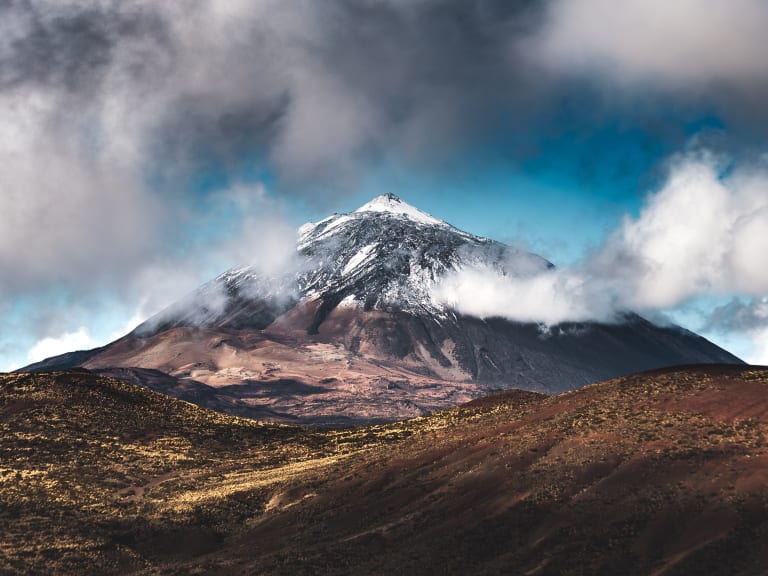
If you didn’t find the first day of your tour of Santa Cruz de Tenerife adventurous enough, get ready, because on the second day I’ll suggest an itinerary through the natural beauty of Teide National Park, home to Tenerife’s highest peak, and you’ll also be able to visit other places such as Roque Cinchado and the Pyramids of Güímar.
Visit Teide National Park, Spain’s highest peak
Teide is the highest point not only in Tenerife but also in Spain, as well as the third-highest volcano in the world. Inactive for over 200 years, it is now an essential stop for tourists visiting the Canary Islands, as its peaks offer some of the best views of the Atlantic islands.
Teide is located about 65 kilometres south of Santa Cruz and the best way to visit it is on an organised excursion, although you can also explore it on your own by driving along the TF-21 on a journey lasting an hour and a half.
If you decide to go on one of the many available excursions to Mount Teide, you can explore the hiking trails accompanied by an expert local guide, who will provide you with information about one of Spain’s most iconic sites.
Teide Cable Car
During your visit to the volcano, you can also choose to take the Teide Cable Car, which in a 10-minute journey connects the base of the National Park to La Rambleta station, located a few metres below the summit.
This is the most accessible way to reach one of the highest points of Teide and costs approximately €49 per visitor, including access to the Pico Viejo Viewpoint.
Along with the rest of Teide National Park, this spot is one of the best in Europe for stargazing at night. One of the best ways to do this is with an organised excursion specifically designed for this activity.
Go on a hiking trail around Roque Cinchado
In the heart of the island, within Teide National Park and next to the volcano, you can visit Roque Cinchado, one of Tenerife’s most iconic rock formations .
El Cinchado belongs to the Roques García group , although it has a unique shape, with a base narrower than the peak, which sets it apart from the rest and makes it an attraction in its own right.
At Roque Cinchado, situated at an altitude of 2,100 metres, you can take some of the best photographs of Tenerife. On nights when there is a full moon, the Natural Park offers excursions to gaze at the starry sky.
Visits to Roque Cinchado are often combined with a trip to Alto de Guajara, the highest peak in the natural amphitheatre of Las Cañadas del Teide, and with hiking excursions in the Montaña Blanca and the Lunar Landscape.
Visit the Pyramids of Güímar
On the way back to Santa Cruz de Tenerife, along the TF-1, you’ll find the Güímar Pyramids Botanical Garden and Ethnographic Park, a vast open-air museum built around six pyramidal structures oriented towards the sun according to the astronomical calendar, which were constructed in the 19th century by the indigenous Guanches.
These pyramids are the main attraction in Güímar, in the west of Tenerife. The site also includes the Ethnographic Park, the Casa Chacona Museum and the Poison Garden, which is the best-known of the park’s botanical gardens.
You can visit this site every day from 10.00 to 18.00, and general admission costs approximately 13 euros.
You can explore the Pyramids of Güímar with an audio guide and marvel at one of the few indigenous ruins still standing in the Canary Islands, which preserve the Guanche culture in Tenerife.
Day 3: Visit Siam Park, go on a whale-watching excursion and explore the beaches of southern Tenerife

After an adventure-filled day, for the third day I suggest an itinerary through the south of the island to visit what is considered the best water park on the planet.
You’ll also be able to explore some of Tenerife’s most beautiful beaches in this area, such as Playa de las Américas, Playa del Duque and Playa Fañabé.
Visit Siam Park, a theme park featuring Thai architecture
Siam Park is not only one of the best theme parks in Tenerife but also one of the best in the world, according to online polls held every year. Located in Costa Adeje, in the south of the island, you can get there from Santa Cruz by car via the TF-1 road in just under an hour, or by bus on routes 110 and 111 to Magma station.
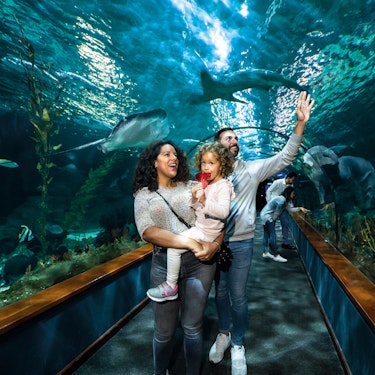
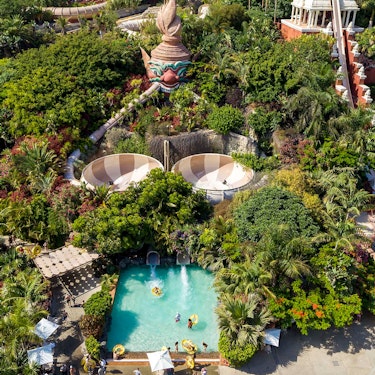
Siam Park is a themed water park inspired by Thai architecture where you can surf waves up to 4 metres high, relax on the natural white sandy beach and feel the adrenaline rush of the Tower of Power, a 28-metre attraction where you can race through an aquarium teeming with sharks and rays.
This park is an ideal place to visit with the family and is open every day from 10.00 to 18.00. General admission tickets cost approximately €40 for adults and €28 for children.
Go on a whale and dolphin watching trip
The Canary Islands are one of the best places for dolphin and whale watching, and Tenerife is no exception. That’s why, from Puerto Colón, just a few streets away from Siam Park, you can book a whale-watching trip – an ideal plan if you’re touring the island with children and want to learn about the different species of whales found in Tenerife.
The island offers whale-watching trips for all ages and at various price points, though I recommend those that sail along the coast of Tenerife on a sailing boat, as you’ll be able to see cetaceans in their natural habitat. As the boat is smaller, you’ll get a close-up view of the dolphins and whales, and some options even allow you to go snorkelling, weather permitting.
Bear in mind, too, that the best time to see whales and dolphins in Tenerife is between December and June, during the winter and spring seasons .
Explore the beaches of southern Tenerife
When you return from the whale-watching trip, you can grab a bite to eat in the Costa Adeje area and then visit some of the beaches in the south of Tenerife, where you can take a dip in the warm, crystal-clear waters and watch the sunset. Here are a few I can recommend:
Playa de las Américas
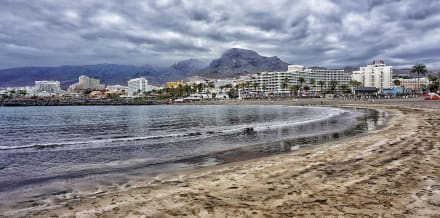
Playa de las Américas is the most famous beach in the south, stretching from the Chayofita mountain to the Barranco del Rey. In the area, you’ll find a variety of pubs, bars and restaurants, as it’s one of Tenerife’s main entertainment hubs.
Playa del Duque
If you prefer a quieter option , you can visit Playa del Duque, north of Siam Park. It is a beach enclosed by artificial cliffs, with crystal-clear, warm waters, plenty of space to relax and fewer tourists.
Fañabé Beach
If, on the other hand, you’re looking for a more traditional beach, you can visit Fañabé, which is little known to tourists and usually frequented by locals. There, as well as relaxation areas, you can find some of the best kayaking and diving experiences in Tenerife.
Day 4: Visit Cueva del Viento and the route through the villages of northern Tenerife

For the final day, I suggest an itinerary through the north of the island to visit Cueva del Viento, which is the largest volcanic tube in Europe and one of the largest in the world.
You mustn’t miss the picturesque villages of San Cristóbal de la Laguna, Puerto de la Cruz, Icod de los Vinos and Garachico, so you can discover a different side of Tenerife.
Visit the Cueva del Viento
The Cueva del Viento, which for years was considered the largest volcanic tube in the world, is a remnant of the lava flows from Pico Viejo, which, situated next to Mount Teide, is one of Tenerife’s highest peaks. This tube, which stretches for 17 kilometres, is a natural spectacle of chasms and lava terraces that also serves to analyse the volcanic origin of the Canary Islands.
Here you can also take some of the best photographs of Tenerife and go on a guided tour where you’ll learn about fossil finds and other palaeontological treasures in one of the spots that was forgotten on the island for years.
Bear in mind that a visit to Cueva del Viento can take between 3 and 4 hours, depending on your walking pace, and that it is of medium-high difficulty due to the winding terrain and the narrow spaces inside the tube, which is described as a journey into the bowels of the earth.
- How to get there: You can reach Cueva del Viento by car from Santa Cruz via the TF-5 road in a journey of approximately 45 minutes, or by taking bus routes 108 and 102, connecting with route 360
- Price: General admission costs approximately 20 euros.
Explore the route through the villages of northern Tenerife
To round off your tour of Tenerife and discover a different side of the island, an ideal option is to explore the villages of the north, which, away from the busier beaches, offer fine cuisine, stunning landscapes, idyllic routes and a wealth of attractions.
Icod de los Vinos
The first nearby village, located three kilometres from Cueva del Viento, is Icod de los Vinos, home to the famous Millennial Dragon Tree , the oldest in the Canary Islands. There you can also explore the historic centre, visit its taverns for lunch and, if you’re a nature lover , discover the Mariposario del Drago, one of the largest butterfly houses in Spain.
Garachico
In Garachico , you can explore a village that was rebuilt from the ashes left by the eruption of the Trevejo volcano, as well as a picturesque spot featuring the Castillo de San Miguel and the Parque de la Puerta de la Tierra, alongside viewpoints offering sweeping panoramic views of the island and the natural pools of El Caletón, formed by volcanic lava.
Puerto de la Cruz
Puerto de la Cruz, located a 30-minute drive from Garachico, is the tourist hub of the island’s north, boasting a seafront promenade featuring San Felipe Castle and some of the area’s best beaches, such as Playa Jardín and San Telmo Beach.
San Cristóbal de la Laguna
The final stop before returning to Santa Cruz will be San Cristóbal de la Laguna, situated just on the outskirts of the capital, a town with colonial-style narrow streets that was once the capital of Tenerife. There you can visit the Cathedral, Casa Lercaro and the Convent of Santa Catalina de Siena, as well as bars and restaurants where you can have dinner and raise a glass to your eventful tour of Tenerife.
And that’s how this 4-day trip to the best spots in Tenerife comes to an end. Plenty of time to discover and enjoy much of the culture, history and fun the island has to offer. Although I’m sure you’ll be left wanting to come back!