



More about: Lisbon in 4 Days: everything you need to know
If you're wondering how many days you need to spend in Lisbon to get to know it thoroughly and not miss anything, in my opinion, the answer is four days. In that time, you'll be able to visit its most important neighbourhoods and monuments without feeling rushed, and you'll also have time to explore some of the interesting towns in the surrounding area, such as Sintra and Cascais.
- Lisbon Alfama and São Jorge Tour with Guided Visit to the Cathedral
- From €21
- 3 hours
- Small group tour
- With admission to Lisbon Cathedral and a visit to the secret Jewish quarter
- Professional guide
- Book now
- Lisbon Belem Tour
- From €35
- 3 hours
- Small group tour
- Explore the Jerónimos Monastery, the Monument to the Discoveries and more
- Professional guide
- Book
- Lisbon Jerónimos Monastery Tickets
- From €20
- At your own pace
- Explore on your own
- With access to the 16th-century cloister and the monks' former refectory
- No guide
- Book now
Day 1: Discover the historic centre, the Alfama, Baixa and Chiado neighbourhoods
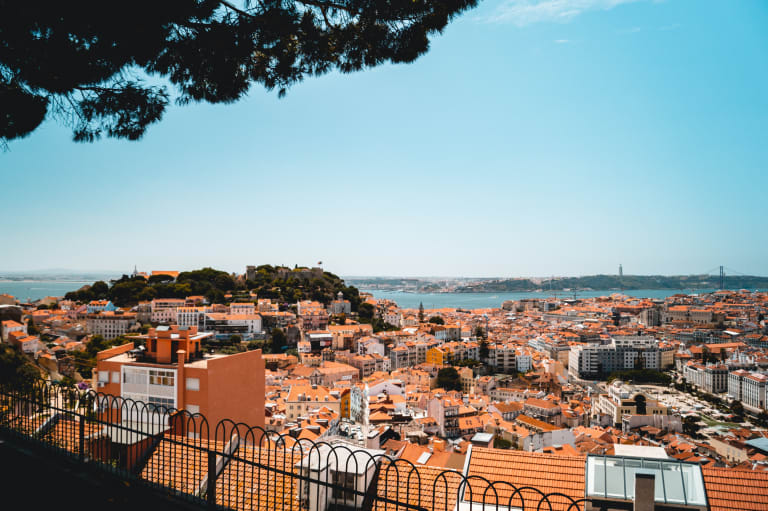
The best thing to do when you arrive in Lisbon is to start by visiting its most central neighbourhoods: Alfama, Baixa and Chiado make up the historic centre of the Portuguese capital and there is plenty to see and do in their streets. If you get up early, you can explore them all at your leisure and see what they have to offer on the first day of your trip to the capital of Portugal.
Explore the Alfama neighbourhood
The best place to start exploring Lisbon is to book a guided tour of Alfama. This historic area is located on one of the city's hills, under the watchful eye of St. George's Castle, and captures the essence of Lisbon's culture. The most interesting places to visit in the Alfama neighbourhood, besides St. George's Castle, are:
- Lisbon Cathedral.
- The Portas do Sol viewpoints.
- Santa Lucia.
- The National Pantheon.
You will learn all about these places on this three-hour tour of Alfama and São Jorge with a professional guide, who will take you to Lisbon Cathedral and show you the history and architecture of this neighbourhood.
If you decide to visit Alfama on your own, keep in mind that you can explore it on foot or take the famous tram 28, which runs through most of the neighbourhood and will save you from having to climb several of its numerous steep streets. I recommend that you take some time just to stroll around and enjoy the atmosphere, the street musicians and the cuisine.
Head down to the Baixa and Chiado neighbourhoods
After visiting Alfama, it's time to head down to the Baixa and Chiado neighbourhoods. To visit them, you can book the Lisbon tourist tram or, if you prefer to walk, go to Pedro IV Square as your starting point and, from there, walk down Rua Augusta towards Commerce Square.
Before you get there, take a detour to go up the Santa Justa lift. With this lift, in addition to the viewpoint, you can go up to the Convento do Carmo to visit its spectacular ruins. Now, to end the day, head to Praça do Comércio.
At this famous spot, you can climb the Arco da Rua Augusta and enjoy the banks of the Tagus. Near the square, there are many restaurant options where you can end the day with a good dinner.
Enjoy a sunset cruise on the Tagus
And to end the day, there's no better plan than booking a sailboat trip. Feeling the wind on your face as you sail along the Tagus is a sensation you shouldn't miss.
This trip, which lasts approximately two hours, will allow you to admire Lisbon's most important monuments while enjoying a glass of Portuguese wine.
Day 2: Discover the Belém neighbourhood in depth
The second day begins right where the first ended, in Praça do Comércio. From there, you can take tram number 15 to the Belém area. This neighbourhood of Lisbon is 7 kilometres from the centre and takes about 20 minutes to reach by tram. It has so many points of interest to see that you should set aside the whole day for a tour of the Belém neighbourhood.
Visit the Jerónimos Monastery
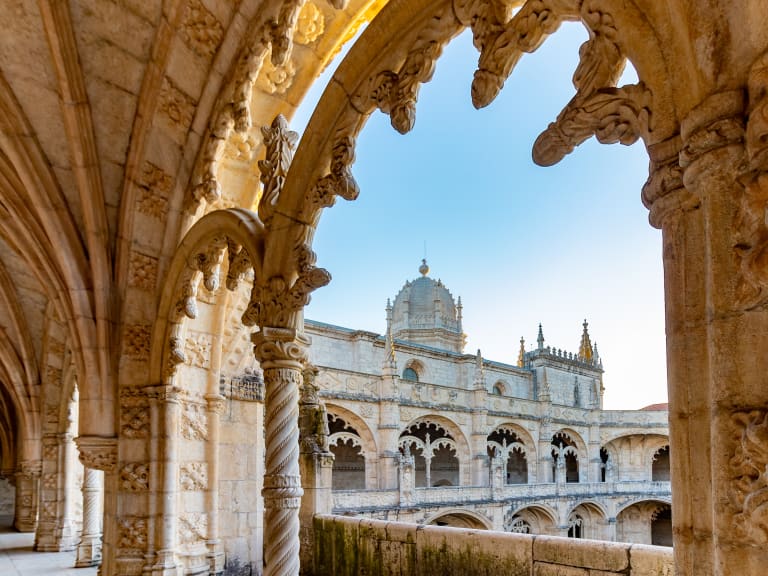
The Jerónimos Monastery, a World Heritage Site, is recognised as the most visited monument in Lisbon. It is a spectacular complex consisting of an impressive cloister and church and the National Archaeological Museum, which is housed in its east wing.
I recommend booking tickets to the Jerónimos Monastery in advance, as there is always a queue. However, the visit is well worth it. The monastery is a must-see in Lisbon.
Try the Pastéis de Belém
One of the best-known experiences in the Belém neighbourhood is tasting its famous pastries. These sweets have crossed borders and are very popular, but nowhere can you taste them better than in their place of origin. Next to the monastery is the original factory where you can taste these delicacies.
What's more, if you love these pastries as much as I do, don't hesitate to book a pastel de nata cooking class. They will teach you how to make these culinary delights while you enjoy a cup of tea or coffee.
Don't miss the Monument to the Discoveries
Opposite the Jerónimos Monastery and across the Garden of the Empire Square is the Monument to the Discoveries.
It is one of the most photographed spots in Lisbon thanks to its spectacular height of over 50 metres. It was built to honour the memory of the explorers who set sail from the very waters where Lisbon is located.
Enter the Belém Tower
On the western side of Belém, jutting out into the waters of the Tagus, stands the Tower of Belém, undoubtedly Lisbon's most iconic landmark. It is a small fort on the banks of the Tagus that was used to defend the city, serve as a lighthouse and even as a dungeon.
Book tickets for the Tower of Belém and visit its interior and terrace, while enjoying spectacular views of the Tagus River and the 25 de Abril Bridge.
These are the essential sights of Belém, but if you are left wanting more, you can visit some of its many museums, such as the archaeological museum or the carriage museum, or stroll through its parks and gardens.
Day 3: Take a trip to Sintra
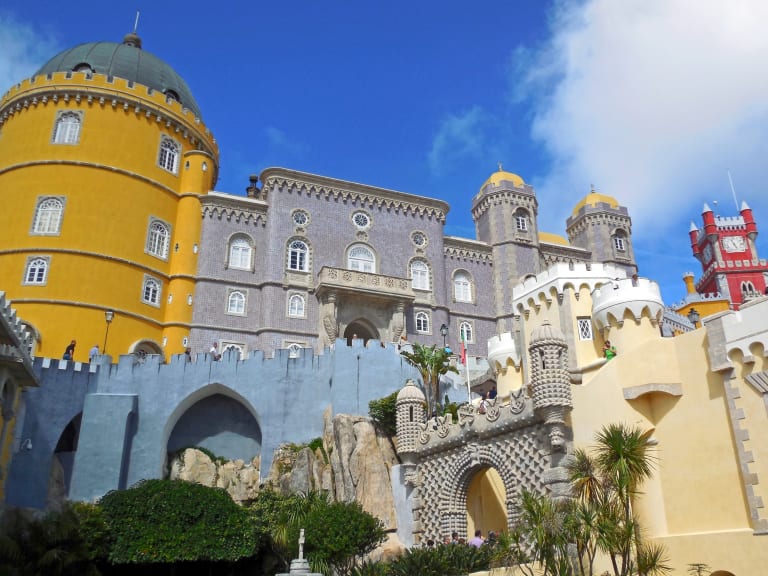
After two days in Lisbon, you will have had plenty of time to see the main monuments. Now it's time to visit the surrounding area, and one of the most outstanding places in Portugal is Sintra. Located about 30 kilometres from Lisbon, this town is almost like a fairytale setting with its palaces and gardens.
So much so that it was declared a World Heritage Site in 1995. It is located in the middle of a natural park, Sintra-Cascais.
You canvisit Sintra from Lisbon by car or bus, but it is best to book an excursion to Sintra, which includes round-trip transport and a professional guide who will show you all the charms of the place. Here are several options:
- Excursion to Sintra and Cascais, from €69
- Excursion to Sintra, Cascais and Cabo da Roca, from €79
Be dazzled by the Pena Palace
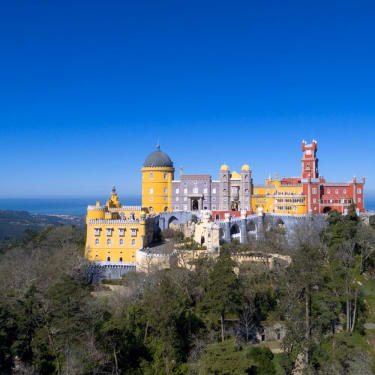
There are many buildings to see in Sintra. The Pena Palace is the most visited and emblematic, and one of the most popular monuments in all of Portugal. It is also considered one of the most beautiful palaces in Europe thanks to its unique blend of styles.
The Pena Palace should be the first and essential visit on your trip to Sintra. To do so, don't hesitate to book your ticket to the Pena Palace and be dazzled by this fairytale castle and its 200 hectares of gardens. And if you have time, also book tickets for the Pena Park in Sintra.
Discover the Quinta da Regaleira
It stands out for its architecture, its gardens, its mysticism and its close links to Freemasonry. It holds many secrets, so it is advisable to visit it with a guide.
This is another must-see in Sintra and you can book an excursion to Quinta da Regaleira together with Sintra, Cascais, the Pena Palace and Cabo da Roca, which lasts approximately eight hours.
Don't miss the National Palace of Sintra
Located in the centre of Sintra, the National Palace's interior remains almost intact. On the outside, its two large conical chimneys are striking and visible from many points in the park and the town of Sintra.
Explore the Palace of Monserrate
It is known as the hidden gem of Sintra, as it is not as popular as its neighbours. However, it has more than enough charm to be included in the list of essential places to see in Sintra.
Visit the Castelo dos Mouros
These last four points are considered essential in Sintra, but the town is home to many more treasures. If time allows, you can book tickets for the Castelo dos Mouros, the Convento dos Capuchos or the Chalet and Garden of the Countess.
Day 4: Spend a night in the Alto neighbourhood and visit Cascais

The fourth day in Lisbon has to start during the night of the third day. After spending several hours in Sintra, what better way to immerse yourself in Lisbon's nightlife than in the best area for it, the Alto neighbourhood. On our last day, you can take advantage of another excursion to the town of Cascais, very close to Lisbon, and finish seeing the city by visiting the Park of Nations.
Discover the Alto neighbourhood at night
After visiting Sintra, the best thing to do is enjoy Lisbon's nightlife, and the perfect place for that is the Alto neighbourhood. Right in the heart of the city, this neighbourhood is avant-garde, modern and full of life, especially when night falls.
There is a wide range of restaurants where you can dine while enjoying a Portuguese fado performance. And after dinner, you can enjoy its many pubs or visit the Santa Catalina viewpoint, where, in addition to enjoying the night views, stages are often set up for night-time concerts. It is also a meeting point for the locals and there is always a great atmosphere on its terraces.
Stroll through Cascais
On the morning of the fourth day, you have the option of booking an excursion to Cascais, located about 30 kilometres from Lisbon. During the 20th century, it was a town mainly inhabited by aristocrats and artists, which is evident as soon as you stroll through its streets with beautiful mansions and numerous street artists.
In the 1940s, fleeing the war, many nobles arrived and took refuge in its mansions and enjoyed its beaches. This atmosphere is said to have inspired Ian Fleming to bring the character of James Bond to life. Spending a morning strolling through its streets and enjoying its beaches is a highly recommended activity , especially if you visit in summer.
Say goodbye at the Park of Nations
After visiting Lisbon in depth, a good way to say goodbye to the city is to do so at the Park of Nations, located in the eastern part of the city in what was once an industrial neighbourhood.
This modern, futuristic park was built to host the 1998 World Expo. It differs greatly from other neighbourhoods due to its modern buildings, such as the Gare Do Oriente station, designed by Santiago Calatrava, and the Lisbon Oceanarium, one of the largest aquariums in Europe and a must-see, especially if you are travelling with your family. Be sure to book your tickets for the Lisbon Oceanarium in advance, as they are in high demand.
To bid farewell to Lisbon, you can take the park's cable car to watch the sunset from above with the Vasco da Gama Bridge in the background. It is the longest bridge in Europe, spanning 17 kilometres across the Tagus River.