10 Things to Do in Alfama
Let yourself be charmed by the hidden corners of the city’s oldest neighbourhood

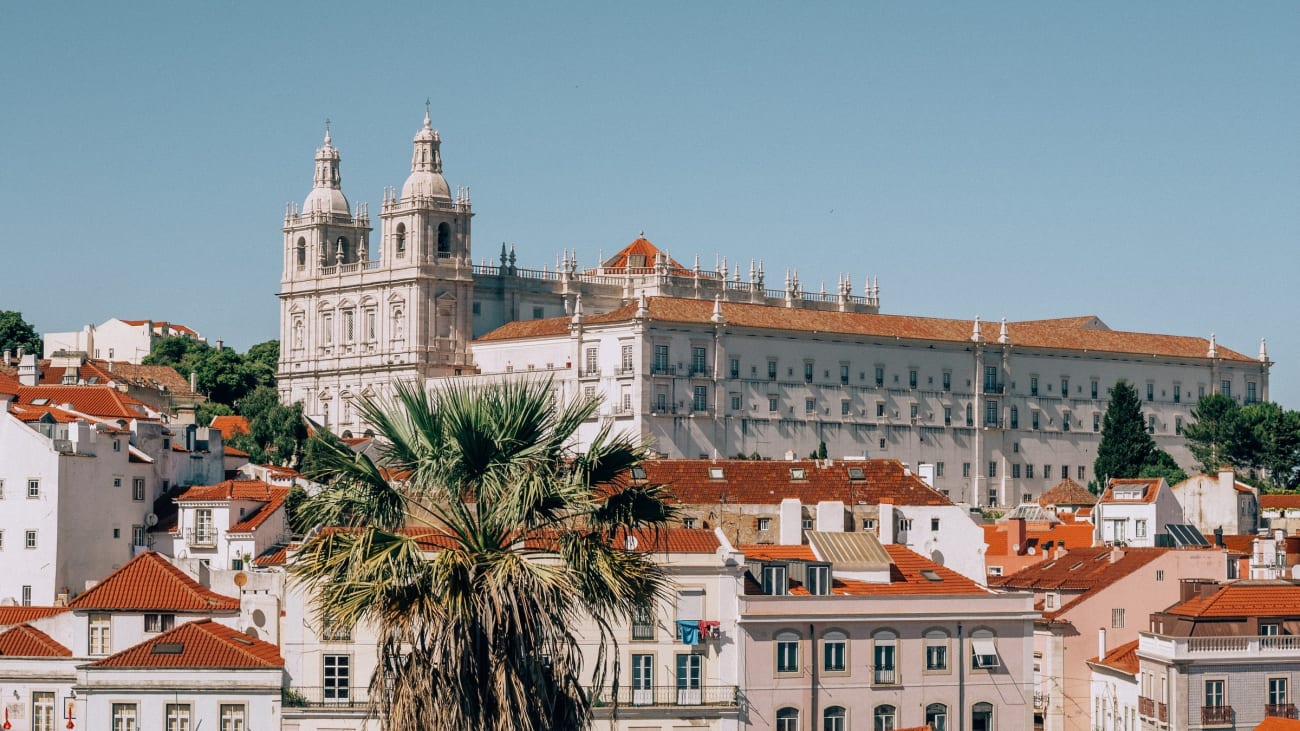
View of Alfama, Lisbon | ©Filiz Elaerts
Steep streets, viewpoints, pastel-coloured houses, trams and the melodies of fado: Alfama is Lisbon in miniature, and exploring it means immersing yourself in a truly authentic neighbourhood. Read on to discover what to see and do in this part of the Portuguese capital
1. Choose a guided tour

A great way to get to know Alfama is through a guided tour. You’ll discover the oldest neighbourhood in the Portuguese capital with an experienced guide who’ll take you to the area’s main tourist attractions. These city tours of Lisbon usually last between two and three hours and cover the district’s iconic sights: the Cathedral, the viewpoints and São Jorge Castle. The tours can be taken in Spanish and are available both in the morning and in the afternoon. They usually depart from a location within the neighbourhood or from the central Praça do Comércio in Baixa. As for the price, it is usually around €15.
If you’re short on time, this is the best option. The guides know the shortcuts and the most interesting historical attractions.
2. Climb up to the Alfama fortress

São Jorge Castle overlooks the capital from the top of a hill. Its foundation dates back to the 8th century when the Muslims controlled much of Portugal. At that time, Lisbon was known as al-Ushbuna and was an important administrative and commercial centre. Unfortunately, between the 16th and 18th centuries, it fell into disrepair due to the numerous earthquakes that struck the country.
The restoration work carried out between 1938 and 1944 and in the 1990s has restored some of the castle’s former glory. Today, it is one of the city’s most visited monuments, and its main attraction is the unrivalled view over Lisbon and the River Tagus. Take a few photos and continue your walk to the Castillejo (the former Muslim citadel), the Keep (Torre de Menagem, the largest tower where the royal standard was hoisted) and the camera obscura, a system of lenses and mirrors that allows you to view the city in 360º and in real time.
As it is situated on top of a hill, you will need to walk up Rua de Santa Cruz do Castelo, a street that leads to the entrance of the fortress.
3. Step inside an old church converted into a mausoleum

The white silhouette of the Lisbon National Pantheon (Panteão Nacional) stands out above the rooftops of Alfama. From the outside, the monumental entrance and the large dome are reminiscent of a church, and indeed, this was its original purpose. In the late 17th century, the Infanta Maria of Portugal ordered the construction of a temple to house the relics of Saint Engracia, but less than a century later, a thunderstorm destroyed it. In the 19th century, the Liberal Revolution ushered in the Republic, which designated this site as the most suitable place to house the tombs of illustrious Portuguese figures.
Inside lie figures such as Pedro Álvares Cabral, the fado singer Amália Rodrigues and Eusébio, the Portuguese football legend. Another attraction of the National Pantheon is its large panoramic terrace overlooking the Alfama district. The monument is open from Tuesday to Sunday (from 10:00 to 18:00 in summer and from 10:00 to 17:00 in winter) and admission costs around €4.
If you enjoy religious architecture, the Church and Monastery of São Vicente de Fora stands just a five-minute walk from the Pantheon. The church was renovated in the 16th century according to a design by the Italian architect Filippo Terzi.
4. Visit Casa dos Bicos and immerse yourself in the works of Saramago

Casa dos Bicos was built in 1523 by Brás de Albuquerque, the son of the Viceroy of India, Afonso de Albuquerque. The Portuguese nobleman travelled to Italy and was struck by Renaissance architecture. On his return to Portugal, he commissioned the construction of a residence characterised by the peaks of the façade and the irregular shapes of its doors and windows.
According to experts, it is inspired by the Palazzo dei Diamanti in Ferrara. The building is located at Rua dos Bacalhoeiros 14, and the name of this street gives us a clue. In the 20th century, Casa dos Bicos had lost its residential function and had become a cod warehouse.
Today, it is the headquarters of the José Saramago Foundation and houses a permanent exhibition entitled “A Semente dos Frutos”. The collection includes books, original manuscripts, photographs and other documents linked to or having belonged to the writer. The museum is open Monday to Saturday, from 10:00 to 18:00.
If you’re interested in archaeology, the ground floor of Casa dos Bicos features a number of ancient structures: part of the Fernandine Wall, Roman-era tanks used for preserving fish, and remains of the Islamic wall.
5. Enjoy the view

Lisbon is a city of slopes, hills and esplanades. No visit would be complete without a stop at the panoramic viewpoints scattered throughout the capital. In the Alfama district, there are essentially two of the most beautiful and famous viewpoints:
- Portas do Sol viewpoint (Largo Portas do Sol), a balcony overlooking the Church of São Vicente de Fora, the old town and the waters of the Tagus. It is arguably the best viewpoint in the city. The famous No. 28 tram passes through here, which is why it is quite popular with tourists. Even so, it is well worth a visit to enjoy the view and listen to the street musicians.
- A short distance away, you’ll also find the Mirador de Santa Luzia (Largo Santa Luzia). The viewpoint consists of two levels and features a roof covered in climbing bougainvillea, columns and tiles. From here, you can see the churches of São Miguel and São Estêvão, the dome of the National Pantheon and the Alfama district. The spot is frequented by painters and artisans selling their wares.
Mateo’s tip
If you’re staying near the Portas do Sol viewpoint and don’t mind getting up early, I recommend heading to the viewpoint first thing in the morning. It’s the best spot to watch the sunrise.
6. Try the Portuguese delicacies

After a long walk, it’s time to recharge your batteries and sit down for a bite to eat. There’s no shortage of options in Alfama, as its narrow streets hide establishments offering traditional dishes at affordable prices. Read on to discover where it’s worth stopping without breaking the bank:
- Cervejaria Ramiro, a neighbourhood classic. Despite its name, it’s one of the best fish and seafood restaurants in the city. (Avenida Almirante Reis 1)
- Le Petit Café, a restaurant halfway between the cathedral and the castle. Its menu offers a wide selection of fish. If you want to try their speciality, I recommend ordering an octopus dish. (Largo São Martinho)
- O Beco, a place known for its bacalhau à Brás. Take a seat at one of their tables and enjoy the generous portions (Beco do Espírito Santo 9)
- Almargem, a simple, inexpensive tavern just a stone’s throw from the cathedral. (Travessa do Almargem, 4)
If you’re looking for a vegetarian restaurant, Princesa do Castelo (Rua do Salvador 64A) serves vegan, vegetarian and macrobiotic dishes. Another option is The Food Temple at 18 Beco do Jasmim.
7. Look for a unique souvenir
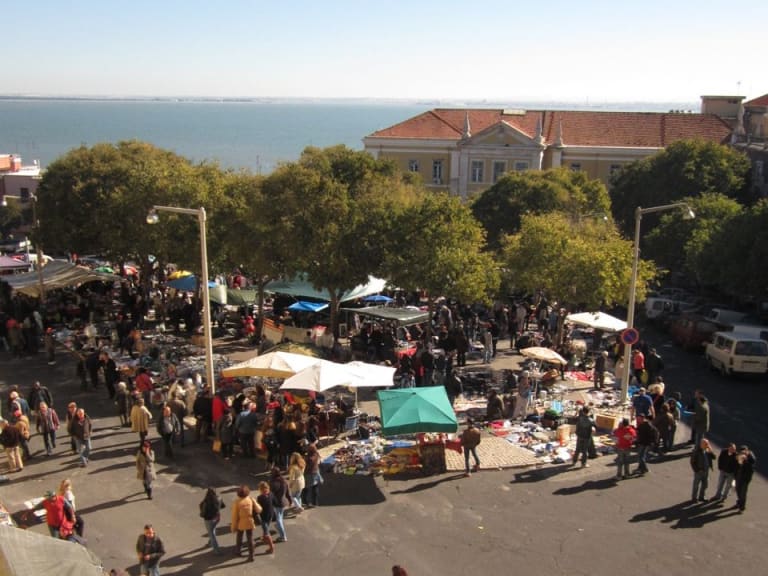
Every Tuesday and Saturday, Campo de Santa Clara hosts the city’s most iconic flea market: the Feira da Ladra. As you might guess, in the past this was where stolen goods were sold, whereas today it’s home to a large number of local vendors and artisans. Here you can buy new and second-hand clothes, vinyl records, second-hand books, ceramics, costume jewellery, tiles, vintage cameras and much more. It’s well worth a stroll among the stalls to pick up an original souvenir. The origins of the Feira da Ladra date back to the Middle Ages, and it’s a must-visit in the Portuguese capital.
After a spot of shopping, you can take a break at the nearby Jardim Botto Machado, a green space much loved by Lisbon locals. Here you’ll find Clara Clara, a café with a terrace in the shade of a hibiscus tree.
8. Try the famous pastéis de Belém in Santo António

The history of pastéis de nata is intertwined with the history of Lisbon. It all began in 1820, the year of the Liberal Revolution. That year, the bourgeoisie, dissatisfied with the state of the country, forced the king to return to Portugal and restore Brazil to colonial status. In this turbulent situation, many religious orders began to face closure and the friars of the Jerónimos Monastery (among others) ceased to receive funding. To alleviate the crisis, the monks began selling egg-yolk-based desserts outside the sacred site.
These desserts proved so successful that the original recipe was acquired in 1837 by the Fábrica de Pastéis de Belém, one of the capital’s best-known establishments.
However, the finest pastries are to be found in the Alfama district. Pastelaria Santo António seems to have found the perfect formula for blending milk, sugar, vanilla and egg yolks. The bakery won the competition for the best Lisbon custard tart in 2019, organised by the Peixe em Lisboa food festival.
Mateo’s tip
Pastéis de Belém make the perfect gift for family and friends. If you’re travelling around Christmas time, you can also take home a bolo rainha, the Portuguese King’s Cake. At the famous Confeitaria Nacional, you’ll find a vast selection of traditional desserts.
9. Take tram 28
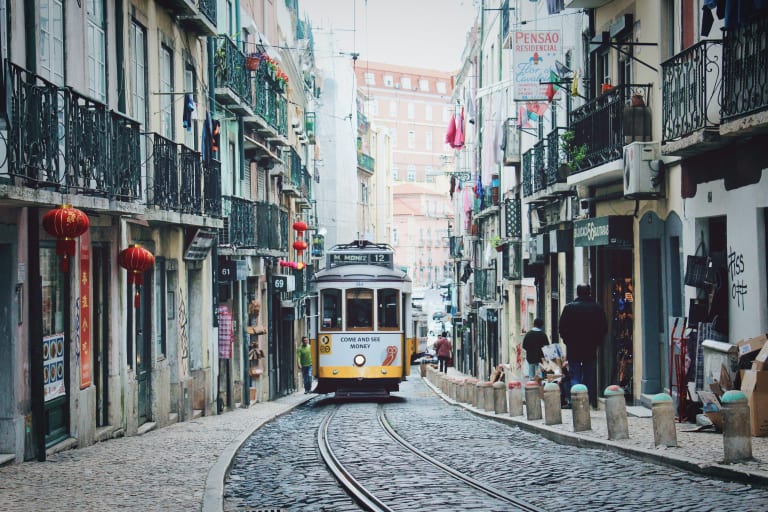
As well as the free tour, another way to explore the neighbourhood is by tram 28. To catch this tram, head to Praça Martim Moniz, a square in Baixa. After leaving the flat part of the city, the tram climbs the capital’s steep streets and passes the main sights of Alfama: the cathedral, the viewpoints and the castle. The journey ends at Campo Ourique station, in Bairro Alto. As for the duration, this can vary depending on the time of day and traffic. Normally, the full journey takes around 50 minutes.
A single ticket costs around €2.90. If you plan to take it more than once, I recommend opting for a day ticket, which costs approximately €6.15. In any case, be careful. As it is popular with tourists, you might encounter a pickpocket.
10. End the tour at a fado tavern

Alfama is one of Lisbon’s oldest neighbourhoods. This is where the true Lisboners live, and its narrow streets are the favourite spot for listening to fado. Some believe the genre stems from the melancholic chants of the Muslims following the Christian reconquest, whilst others think it originated from influences of Brazilian music. What is certain is that fado is synonymous with Portugal, and the best bars serving it are found in Alfama.
One of these is Parreirinha de Alfama (Beco do Espírito Santo 1), an establishment that owes its success to Argentina Santos, one of the most talented singers of her era. In the 1950s, the artist put this bar on the map thanks to her legendary performances and collaborations with singers of the calibre of Berta Cardoso, Alfredo Marceneiro and Celeste Rodrigues.
Another bar with a long-standing tradition and a wealth of positive reviews is Clube de Fado (Rua S. João Praça 86), a historic venue just a stone’s throw from Lisbon Cathedral. For an even more authentic experience, you might opt for A Viela do Fado, a tiny spot at Rua dos Remédios 111. If you’d like to dine whilst enjoying live music, I recommend reading the post ‘Dinner with Fado in Lisbon: the best options’.
Be careful with the small snacks served by the waiters. They aren’t included in the price and are charged separately.