
More about: Top Attractions at the Granada Alhambra Palace
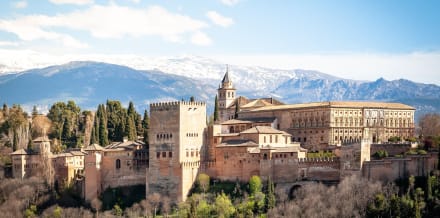
The Alhambra is a treasure of Islamic architecture that Sultan Alhamar, founder of the Nasrid dynasty, ordered to be built in the mid-13th century on Sabika Hill as a military building. Later, it became the royal residence and court of Granada, until 1492 when the Catholic Monarchs completed the Reconquista of Spain and the Alhambra passed into Christian hands.
Whether you have tickets to visit the Alhambra on your own or are joining one of the guided tours of the Alhambra, take note of what you can't miss:
The Alcazaba
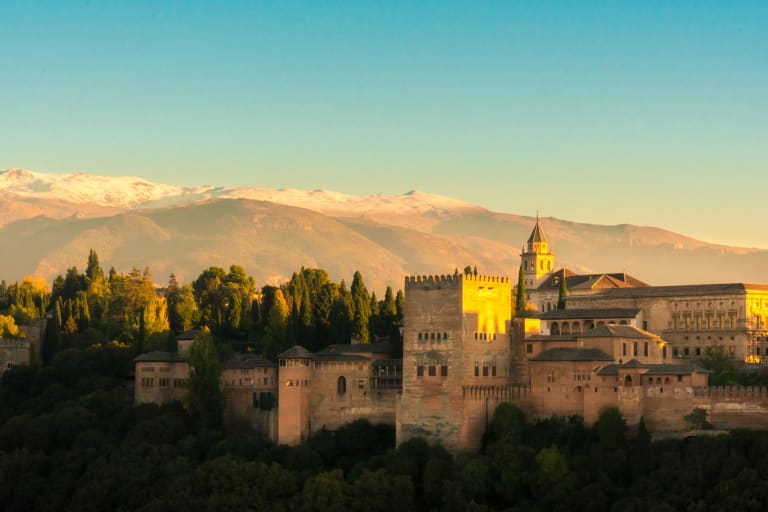
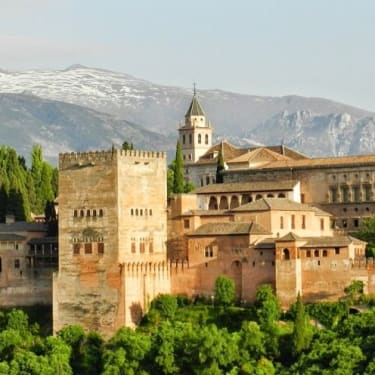
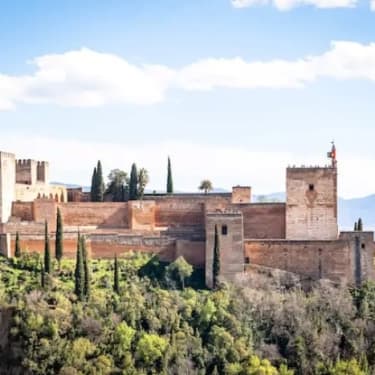
The Alcazaba is one of the top attractions if you book tickets for the Alhambra and the Nasrid Palaces. It is a military building where the army resided to defend the perimeter. It is believed that the Alcazaba was the first to be built on the remains of an ancient castle.
It comprises the western end of the palatine city and is the most prominent part of it when viewed from any viewpoint in Granada.
Plaza de Armas

At the end of a cobbled slope is the Plaza de Armas, which was the original entrance to the Alcazaba. It consisted of a group of buildings where various services were provided to the inhabitants of the fortress.
Torre de las Armas
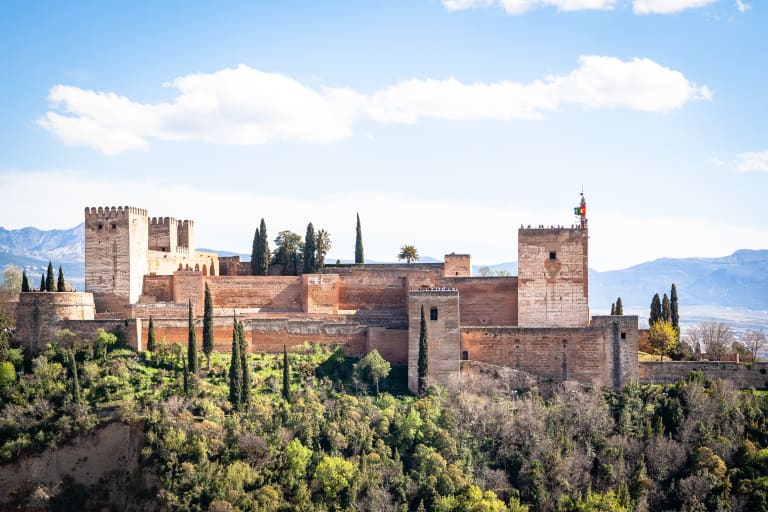
If you book a guided tour of the Alhambra, you will also see the Torre de las Armas, located on the north wall, which provided access to the Alcazaba complex from the Darro river area. In this way, the Nasrid palace was connected to the Albaicín neighbourhood by a raised bridge known as Puente de Los Tableros.
Tower of the Vela

It takes its name from "La Vela" (the candle), the bell that Christians rang here to celebrate the end of the Reconquista in 1492. For this reason, it is also known as the Torre de la Campana(Bell Tower), which rings every 2nd of January to commemorate the victory of the Catholic Monarchs.
Adarves Garden

This is one of the corners of the Alhambra in Granada that you will like the most when you see it, as from its small balcony you can enjoy wonderful views of the Sierra Nevada, the Torres Bermejas, the Vega and the city. So don't miss it! You will find it at the entrance to the Alcazaba.
The Palace of Charles V

Located next to the Nasrid Palaces, it is one of the finest Renaissance buildings outside Italy. Emperor Charles V ordered its construction in the 16th century so that he could enjoy Granada and its Alhambra, which he was truly fascinated by.
Entrance to the palace is free and it is well worth a visit as it is unique in its style. It stands out for its circular courtyard in the centre of this square-shaped building, which demonstrates a high level of knowledge of imperial Roman architecture. If you take a guided tour of the Alhambra, the guide will make a mandatory stop here.
In addition, the Palace of Charles V houses the Alhambra Museum, dedicated to Hispano-Muslim and Nasrid art, and the Museum of Fine Arts, whose works come mainly from convents and monasteries such as La Merced, La Cartuja and San Francisco, among many others.
The Nasrid Palaces

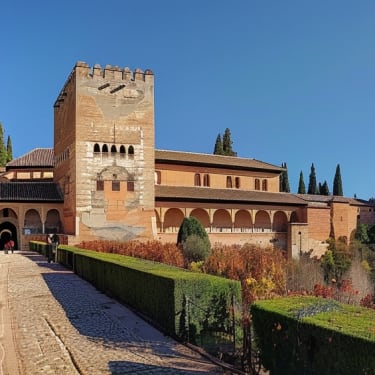
The Nasrid Palaces were the buildings where the kings of Granada resided. They consist of three separate buildings known as the Mexuar (audience chamber), the Comares Palace (the king's official residence) and the Palace of the Lions (the harem and the royal family's residence).
This is the most visited part and one of my favourites, along with the Generalife. Here you will find beautiful spaces such as the Hall of Ambassadors, the symbolic centre of Nasrid power; the Hall of the Abencerrajes, the king's bedchamber; the Hall of the Kings, the sultan's council chamber; and the Court of the Lions, an allegory of paradise.
Take note of the delicate epigraphic inscriptions in classical Arabic carved into plaster or wood that are scattered across the walls and ceilings of the Alhambra.
- The Mexuar: this is the first area we come to when entering the Nasrid Palaces and the oldest of the three buildings. It was here that the sultan administered justice, held audiences and met with his council of ministers.
- The Comares Palace: this was the official residence of the sultan and the site of the Nasrid throne room. Its decoration is notable for its richness, as both wanted to dazzle visitors with the power of their dynasty. And boy, did they succeed! Don't you think?
- The Palace of the Lions: this building was the residence of the royal family and the sultan's harem. If you're looking for the famous Court of the Lions that you've seen countless times in photographs, get your camera out because it's here.
Golden Room

The secretaries of the Islamic court used this room to write down and execute the sultan's rulings. It is known as the Golden Room because of the beautiful wooden ceiling that covers this room, whose original decoration dates back to the time of Mohammed V.
Hall of the Abencerrajes

On the south side of the Patio de los Leones, you will see the Hall of the Abencerrajes, which was apparently the sultan's bedroom. You will be struck by the spectacular dome that decorates the ceiling, but don't lose sight of the fountain in the centre because it has a somewhat disturbing history. Ask your guide to tell you about it because you'll be amazed!
Hall of the Kings

To the east of the Patio de los Leones is the Hall of the Kings, the longest room in the Harem, named after the painting on the vaulted ceiling of the central alcove, which is believed to represent the first ten kings of the Nasrid dynasty.
Given the size of this room in the Alhambra in Granada, it seems that it was used for receptions and parties or as a summer room to rest and escape the heat.
Hall of the Two Sisters

This room was originally created to serve as the sultan's new mexuar, although it is better known as the residence of Sultana Aisha, the mother of Boabdil (the last king of Granada), when she was repudiated by her husband Muley Hacén.
Corridor and Hall of Charles V

Emperor Charles V was always in love with the Alhambra in Granada, which is why he ordered his chambers and an office from which to rule his empire to be built here. Did you know that the writer Washington Irving also stayed here during his visit to Granada in the 19th century? This palace must have inspired so many stories...
El Partal
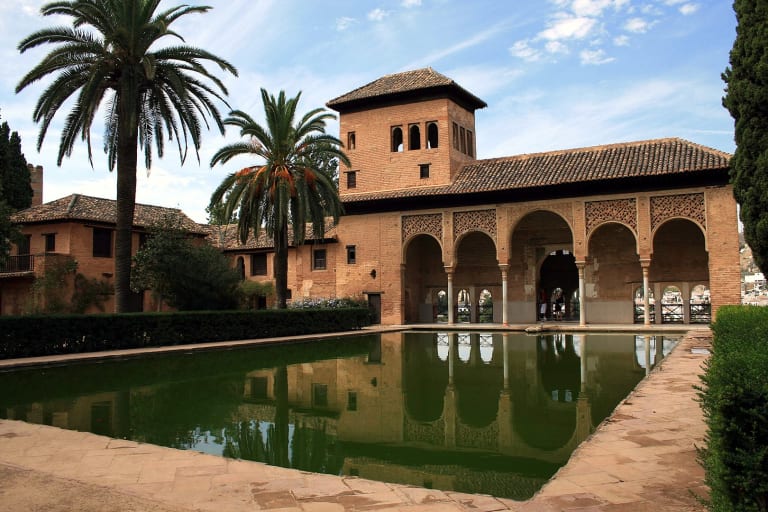
El Partal is an area that houses the remains of the former residence of King Muhammad III. Here you can still see the El Partal palace with its five-arched portico, a beautiful central pool and the famous Torre de las Damas (Tower of the Ladies), which dates back to the 14th century and is one of the oldest buildings in the Alhambra. In my opinion, it is one of the most beautiful parts of the visit.
Calle Real Alta - La Medina

La Medina, located in the upper part, is a residential, administrative and religious area with shops, public baths and mosques where civil servants, nobles and craftsmen who met the needs of the palatine city lived.
Its main streets were Calle Real Baja, Calle Real Alta and Calle de Ronda. The old convent of San Francisco is still preserved here and has been converted into a Parador Nacional hotel.
Gardens of the Generalife

If you book a guided tour of the Alhambra, you will also be able to admire the Generalife, the summer palace of the Nasrid kings located on the Cerro del Sol and one of the few almunias (country estates) that have survived from medieval times in Al-Andalus.
Its gardens were designed for the sultans' rest and recreation. They were filled with ornamental orchards, gardens and perfectly manicured courtyards.
Generalife Palace

When the sultans of Granada wanted to escape the formalities of court for a while, they would go to the Generalife Palace, a place designed for relaxation and rest. It is another of the most beautiful areas of the Alhambra, where you will surely want to take lots of photos and videos.
Partal Gardens

The Partal Gardens are a fantastic place to stroll during your visit to the Alhambra in Granada. They stretch from the Rauda exit to the Torre de las Damas. In the past, this was the site of the gardens that surrounded the royal palaces and the residences of the Nasrid nobility.
Royal Cemetery or La Rauda

Located between the Nasrid palaces and the palace of Charles V, La Rauda is the only cemetery in the monumental complex that remains today. It was intended for the Nasrid royal family, but today it stands empty as Boabdil, the last king of Granada, moved all the tombs to a village in the mountains.
How to get tickets for the Alhambra

The legendary Alhambra is one of the most beautiful monuments in Spain and breaks visitor records every year. As you can imagine, the best way to visit a place like this is to buy your tickets for the Alhambra in Granada online at least a month or two before your trip, otherwise you run the risk of missing out and having to queue for ages at the ticket office to try and get them at the last minute.
At Hellotickets, you can book tickets for the Alhambra and the Nasrid Palaces, as well as compare prices, timetables and availability of tickets and guided tours.
How much do tickets cost?
I recommend you take a look at the tickets for the Alhambra in Granada on Hellotickets because there are several options and the prices are quite reasonable, between approximately £30 and £40.
Organise your visit to the Alhambra
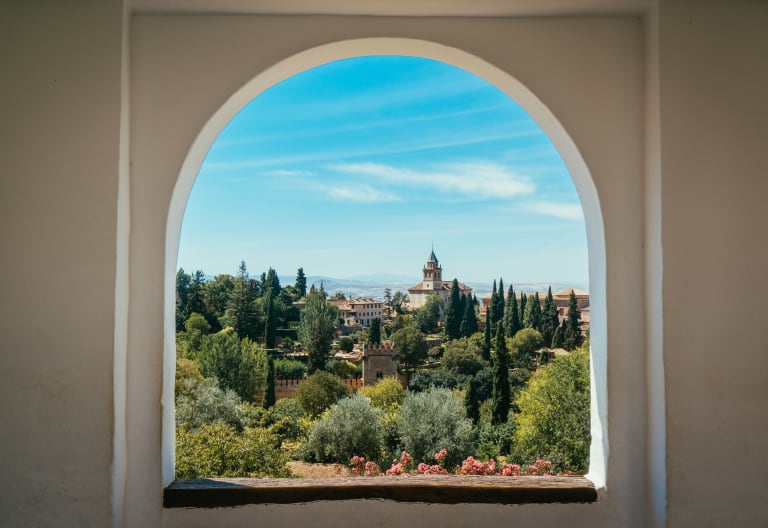
You'll get more out of a monument with as much history and art as this one if you visit it with a guide on a guided tour, because they'll explain anecdotes, secrets and details that you probably don't know and that would probably go unnoticed if you saw it on your own.
How to get to the Alhambra
There are several options for getting to the Alhambra in Granada.
- Bus: several city bus lines go there, such as the C30, C32 and C35.
- Car: enter via the Ronda Sur (A-395). Take the Granada ring road (N-323/ A-44) southbound (Motril). Once you have skirted the city, you will see signs for the Alhambra (Ronda Sur) leading to the monument's car park, where you can park your car.
- On foot: leaving Plaza Nueva, take Cuesta de Gomérez. When you reach Puerta de las Granadas, turn left and continue to Puerta de la Justicia, which serves as the entrance to the Alhambra.
How long does it take to visit the Alhambra?
Around 3 hours and 30 minutes, including queuing at the entrance.
Isabel's Traveller Tip
During the visit, you will walk a total distance of around 3.5 km. Remember to wear comfortable shoes!
Other interesting places nearby: the San Nicolás viewpoint
You may not know it, but the sunset at the Alhambra in Granada is considered the most beautiful in Spain. The best place to see it is from the San Nicolás viewpoint in the Albaicín neighbourhood. From here you will have the best panoramic view of the monument with the Sierra Nevada as a backdrop. It's magical!